Login
Login


admin | 24th Jun, 2026
Silicone Hydrogel vs Hydrogel: Which Contact Lens Actually Feels More Comfortable?
If you have ever pulled out your lenses at the end of a long day and felt instant relief, you already know that not all contacts are made equal. The material your lens is made from has a bigger impact on daily comfort than most people realise — and choosing the wrong one can leave your eyes feeling dry, red, and irritated well before 5 PM.
Two materials dominate the contact lens market today: hydrogel and silicone hydrogel. Both are soft. Both are widely available. But how they behave on your eye across a full day of air-conditioned offices, screens, and Singapore’s humid outdoor air is where things start to differ.
Here is an honest breakdown of both — so you can make the right call the next time you shop for comfortable contact lenses in Singapore.
What Is Hydrogel, and Why Has It Been So Popular?
Hydrogel lenses are made from a water-absorbing polymer called HEMA. They have been around since the 1970s and are still widely used today, mostly because they feel incredibly soft straight out of the blister pack. High water content (usually between 38% and 75%) gives them a cushion-like feel on insertion, which is part of why new wearers tend to love them.
The catch is that hydrogel relies entirely on that water content to carry oxygen to your cornea. As the day goes on and moisture evaporates from the lens, oxygen delivery drops. The lens also starts pulling moisture from your own tear film to compensate — a phenomenon sometimes called the “sponge effect.” By mid-afternoon, eyes can feel gritty, tired, or outright dry.
For shorter wear sessions or people with naturally healthy tear production, hydrogel works fine. But for anyone pushing past eight hours or spending most of the day in front of a screen, the material starts to show its limits.
What Makes Silicone Hydrogel Different?
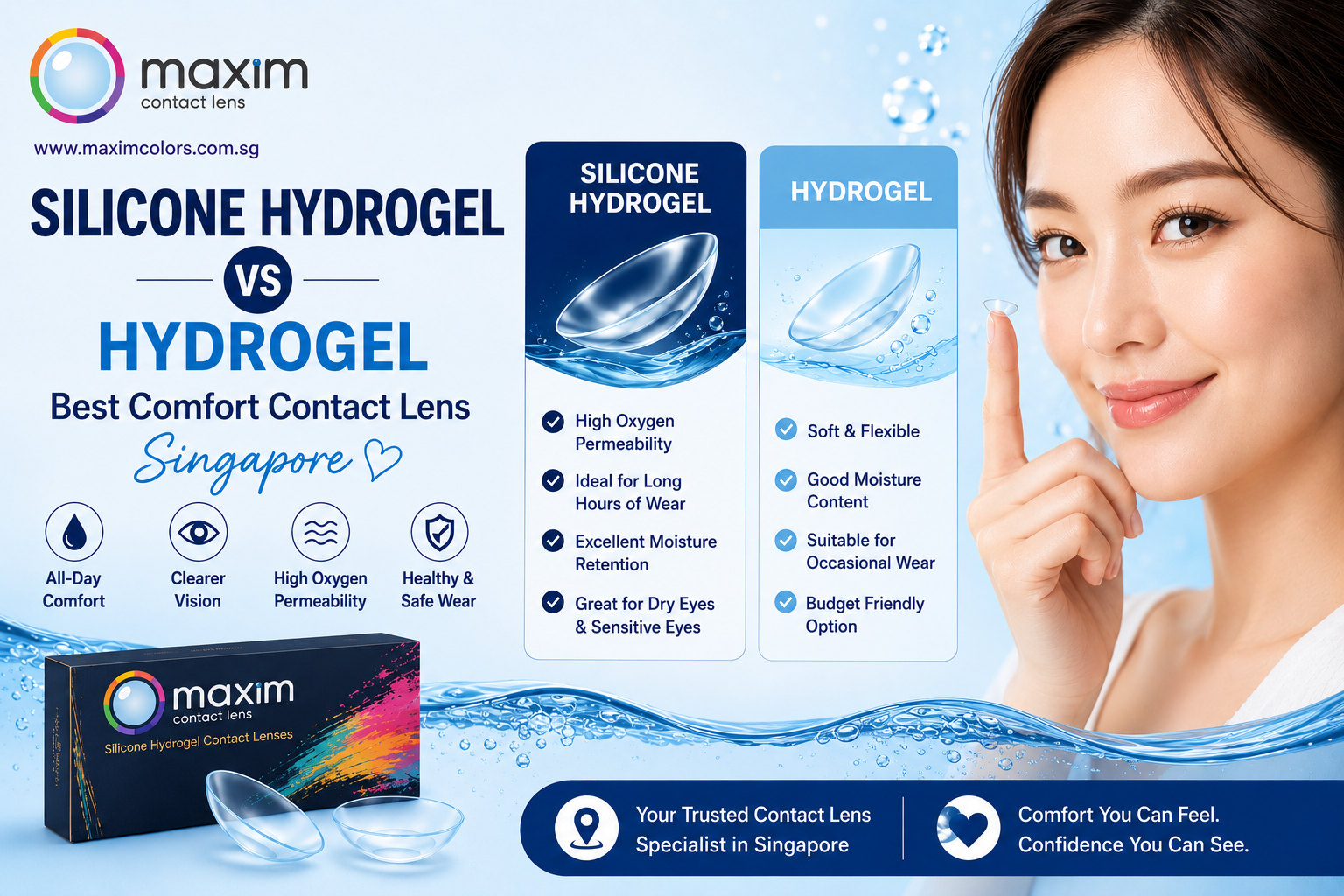
Silicone hydrogel (SiHy) lenses transformed the contact lens industry when they were introduced in the late 1990s. Unlike traditional hydrogel lenses, they use silicone to create microscopic channels that allow oxygen to pass directly to the cornea without relying on water content alone.
As a result, silicone hydrogel lenses deliver significantly more oxygen to the eyes, helping keep them healthier and more comfortable throughout the day. Better oxygen flow can reduce redness, dryness, and the gritty sensation often associated with oxygen deprivation.
Some wearers may notice that silicone hydrogel lenses feel slightly firmer when first inserted. This is due to their higher modulus, which gives the lens more structure. However, most people adjust quickly, and the lenses often provide superior end-of-day comfort compared to traditional hydrogel options.
Because silicone naturally repels water, modern silicone hydrogel lenses incorporate advanced wetting technologies and moisture-retaining agents to maintain hydration. These innovations help the lens surface stay smooth and comfortable, creating a more natural wearing experience and supporting long-lasting comfort throughout the day.
The Real-World Comfort Comparison
Here is where theory meets real life:
Morning insertion: Hydrogel wins here, slightly. It feels softer immediately and some wearers describe it as more forgiving during that first blink.
Mid-day (hours 4–8): SiHy pulls ahead. Eyes stay clearer, less red, and more comfortable as the hours stack up.
End of day (hours 8–12+): SiHy wins outright. Hydrogel lenses that have lost moisture through the day become stiff and uncomfortable. SiHy maintains hydration and shape significantly better.
Digital screen use: SiHy is the better fit here. People blink less when staring at screens, which reduces tear film refresh and oxygen supply. The higher oxygen permeability of SiHy compensates for this.
Humid environments: Both materials perform reasonably well outdoors in Singapore’s heat. But in air-conditioned spaces — offices, malls, co-working spaces — SiHy holds its moisture more reliably because it does not depend on ambient humidity to stay hydrated.
For anyone working long hours or spending significant time on devices, silicone hydrogel is generally considered the best comfort contact lens Singapore eye care professionals recommend.
What About Coloured Lenses?
This is where the question gets interesting for most people shopping in Singapore. Coloured contact lenses add another layer to the material conversation because pigment layers can affect how oxygen moves through the lens.
Maxim Colors offers comfortable contact lenses in Singapore that are designed with comfort and hydration in mind — because looking good should not mean compromising on eye health. Their lenses are available in a range of daily and monthly wear options with UV protection built in, making them suitable for long days both indoors and out.
If you are unsure which lens type suits your wear habits, their Wear and Care guide is a solid starting point for understanding how to maintain lens comfort through the day.
Who Should Choose Hydrogel?
Hydrogel is not a bad choice — it just works best in specific situations:
- Occasional or short-term wear (four to six hours)
- People with sensitive eyes prone to lipid deposits, since hydrogel tends to attract fewer proteins than SiHy
- Budget-conscious wearers who do not wear lenses daily
- First-time wearers who want the softest initial feel while they adjust
Who Should Choose Silicone Hydrogel?
SiHy is the stronger option for:
- Daily wear of eight hours or more
- Digital professionals and students spending long hours on screens
- People who work or spend extended time in air-conditioned environments
- Anyone with dry eye tendencies or a history of redness with traditional lenses
- Those who want the best comfort contact lens Singapore options available for all-day wear
Many eye care specialists now recommend daily disposable SiHy lenses as the gold standard for dry eye sufferers specifically. A fresh lens every morning means zero protein or lipid buildup — which is one of the biggest hidden contributors to end-of-day discomfort.
A Note on Deposits and Cleaning
Silicone’s porous structure does attract more protein and lipid deposits from your tear film compared to hydrogel. For monthly or bi-weekly SiHy lenses, thorough cleaning with a quality multipurpose solution or hydrogen peroxide system matters more than it does with hydrogel. If you are not a meticulous cleaner, daily disposable SiHy lenses sidestep this issue entirely.
Check out Maxim Colors’ lens care products and subscription plans if you want a consistent supply without the hassle of remembering to reorder every month.
The Maxim Colors Difference
Maxim Colors has built a reputation for being among the most comfortable contact lenses in Singapore — particularly for wearers who want colour without sacrificing breathability or moisture. Their lenses are designed for Singapore’s specific conditions: long indoor workdays, heavy screen use, and the shift between humid outdoor air and dry, air-conditioned interiors.
Their range is available both online and through local retailers across Singapore — so you can pick up a pair conveniently or try before you commit to a subscription.
For anyone who has struggled with dryness, redness, or end-of-day discomfort with other brands, it is worth trying a material that is actually built for the way you live.
FAQ:
Is silicone hydrogel better than hydrogel for sensitive eyes?
It depends. SiHy is better for oxygen delivery and long-wear comfort. However, hydrogel lenses attract fewer lipid deposits, which some people with sensitive eyes find more tolerable. A fitting from an optometrist helps identify what works best for your tear chemistry.
Can I wear silicone hydrogel lenses if I have dry eyes?
Yes. SiHy is generally recommended for dry eye wearers because it does not rely on water content for oxygen transmission, so it is less likely to pull moisture from your tear film. Daily disposable SiHy lenses are especially useful since they eliminate deposit buildup.
Are silicone hydrogel lenses more comfortable?
For most people, yes. Silicone hydrogel lenses allow more oxygen to reach the eyes, helping reduce redness, dryness, and irritation during long wear. While some traditional hydrogel lenses may feel softer at first, silicone hydrogel lenses are generally better for all-day comfort. If you’re looking for comfortable contact lenses in Singapore, they are often the preferred choice.
What is the difference between silicone hydrogel and hydrogel?
The main difference is oxygen delivery. Hydrogel lenses rely on water to deliver oxygen, while silicone hydrogel lenses allow oxygen to pass directly through the lens. This makes silicone hydrogel lenses more breathable and comfortable for extended wear.
Can I take a 2-hour nap with contacts in?
A short nap is less risky than sleeping overnight with lenses, but it is still not recommended. Wearing contacts while sleeping reduces oxygen flow to the eyes and may cause dryness or irritation. Silicone hydrogel lenses are more breathable, but removing your lenses before a nap is always the safer option.
Final Thought
The hydrogel vs silicone hydrogel debate does not have one universal answer, but for most people living and working in Singapore — long hours, screens, air-conditioning — silicone hydrogel comes out ahead. More oxygen, better hydration retention, and stronger end-of-day comfort make it the best comfort contact lens Singapore wearers with active lifestyles tend to stick with.
Whether you are new to lenses or switching from a brand that has not been working for you, the material matters more than most people think. Start with the right foundation, and every hour of wear gets easier.
Ready to find your fit? Browse Maxim Colors’ full lens range here — or check out their promotions page for current deals on comfortable contact lenses in Singapore.